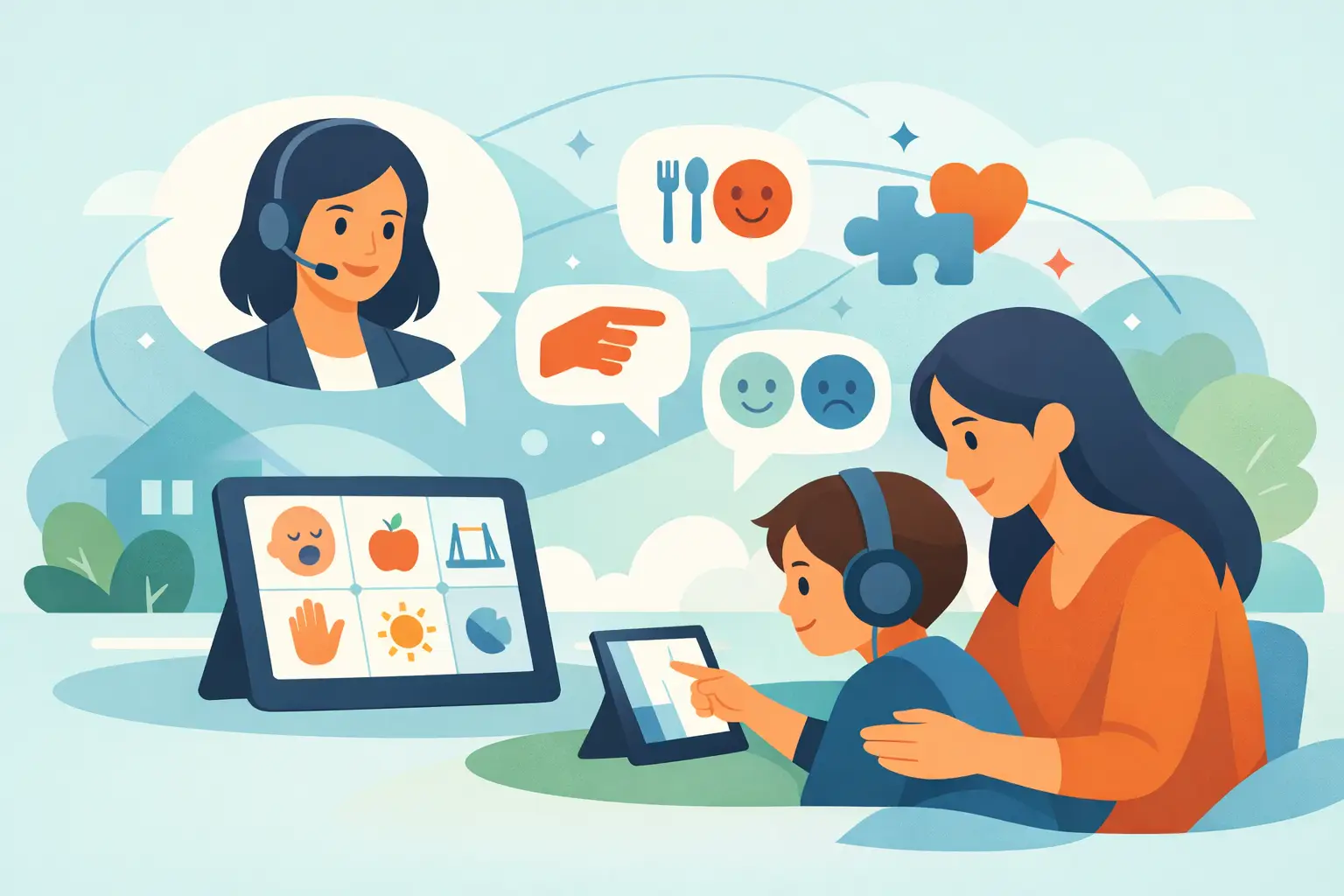
A child is trying to tell you something, and you can see it in their face before you hear it in any sound. That moment is why choosing the best communication app for autism feels so personal. Families are not just comparing features. They are looking for less frustration, more connection, and a way to help their child communicate now, not months from now.
The challenge is that many apps look similar at first glance. They show symbols, offer speech output, and promise support. But once you start using them in real life, the differences become clear. Some are easy to begin but hard to grow with. Some are clinically strong but too complicated for busy families to set up without help. Some work fine in one setting, then break down when home, school, and therapy all need to stay aligned.
How to choose the best communication app for autism
The best choice usually is not the app with the most buttons or the most advanced settings. It is the one your child can access consistently, your family can use confidently, and your support team can actually follow.
For many autistic children, especially those who are non-verbal or minimally verbal, AAC works best when it becomes part of everyday life. That means the app needs to do more than speak words aloud. It should support learning, reduce guesswork, and make it easier for adults to model language across routines like meals, play, schoolwork, transitions, and bedtime.
A good place to start is ease of setup. If an app takes weeks of training before a parent can use it properly, that delay matters. Families are often carrying a lot already. They need something they can start in minutes, with enough guidance built in that they are not left wondering whether they are doing it wrong.
The next factor is language organisation. Some children do better with simple, highly visual layouts. Others benefit from a system that can expand over time as their vocabulary and motor planning improve. There is no single perfect grid size or symbol set for every child. What matters is whether the app gives a clear starting point and a realistic path forward.
What parents and professionals should look for
Speech output is essential, but it is only one piece of the picture. If you are comparing options, look closely at what happens after the child taps a symbol.
Does the app help adults model language naturally? Can parents see what words are being used most often? Is there a way to notice stalled progress before frustration builds? Can a therapist review what is happening between sessions instead of relying only on memory or handwritten notes?
These questions matter because communication growth does not happen in isolated therapy moments. It happens through repetition, consistency, and support across environments. An app that gives a child access to words but gives adults no visibility can still leave families guessing.
This is where progress tracking becomes a major advantage. For parents, it can offer reassurance. For therapists, it can shape better goals. For schools, it can support documentation and collaboration. Data should never replace clinical judgement, but it can make patterns easier to see. If a child is using more requesting words than social words, or communicating more at home than at school, that information can help the whole team respond more effectively.
Another feature worth paying attention to is coaching. AAC can feel overwhelming at the start, particularly for families new to autism communication supports. An app that simply hands over a board is very different from one that guides the adults using it. Built-in coaching, prompts, and practical next steps can reduce hesitation and help parents move forward with more confidence.
The best communication app for autism should work beyond therapy
A common mistake is choosing an app based only on a clinic demo. In a structured session, many tools look successful. Real life is messier.
Children communicate during snacks, car rides, playground routines, bath time, and moments of dysregulation. They need language available when they are calm, excited, tired, playful, and frustrated. The best communication app for autism should support those everyday moments, not just therapy targets.
That means portability matters. So does speed. If it takes too many taps to say something meaningful, some children will stop trying. If navigation is confusing, adults may use it less often. If each caregiver sets it up differently, consistency can fall apart quickly.
Collaboration matters just as much. Families often work with SLPs, educators, behavioural teams, and extended caregivers. When each person uses a different approach, the child carries the burden of that inconsistency. A stronger app creates shared visibility, so everyone can support the same communication system without starting from scratch in every setting.
This is one reason many families are moving away from thinking about AAC as a standalone tool. They need a communication system that connects home use, professional oversight, and measurable progress. That shift is practical, not trendy. It reduces repetition, saves time, and gives children more consistent support.
Common trade-offs when comparing AAC apps
There is no perfect app for every child, and it helps to be honest about trade-offs.
Some apps are highly customizable, which sounds ideal until the setup becomes so complex that families avoid changing anything at all. Others are beautifully simple, but too limited once the child begins to grow. Some focus heavily on clinical control, which can help therapists, but leave parents feeling dependent on outside support for basic use.
Cost is another real consideration. A lower monthly price may look appealing, but if the app lacks reporting, coaching, or collaboration features, the hidden cost can be time, stress, and slower carry-over between sessions. On the other hand, not every family needs the most advanced professional tools on day one. It depends on your child, your support team, and how much independence you need right away.
Device compatibility also matters. If the app only works on one device that never leaves the house, communication may become less consistent. If it requires a strong internet connection for everyday use, that can create barriers in schools, community settings, or travel.
The most useful comparison is not just feature against feature. It is whether the app helps your child communicate more often and helps the adults around them respond with more clarity.
What a strong AAC platform looks like in practice
A strong AAC platform helps a parent get started quickly, without waiting for a formal setup process. It gives the child clear access to meaningful language. It makes room for growth rather than forcing a full system overhaul later. It shows adults what is working and where support is needed.
It also respects the reality that families and professionals are busy. Reporting should be easy to understand. Progress should be visible without manual tracking. Collaboration should feel built in, not bolted on. When an app does this well, it becomes easier to support communication consistently across the people who matter most.
This is where a connected platform can stand apart from a basic speech-generating app. VoiceBloom, for example, is built to help families start independently while still keeping therapists and educators in the loop through shared progress data, reporting, and guided support. That combination matters when the goal is not just access to words, but steady communication growth across home and school.
Questions to ask before you commit
Before choosing any app, ask yourself a few practical questions. Can my child use this with support today? Can we keep using it as skills grow? Will other adults in my child's life understand it easily? Can we see progress without guessing? If support is needed, is it built into the experience or dependent on outside scheduling?
It also helps to think about your own capacity. Some families want deep customization and are comfortable learning a more complex system. Others need an option that removes barriers and gives them a strong starting point immediately. Neither approach is wrong. The right fit is the one that your family can actually sustain.
If possible, trial the app in ordinary moments, not just during intentional practice. Try it during breakfast, transitions, play, or when your child wants something highly motivating. Those moments tell you more than a polished demo ever will.
Choosing communication support can feel heavy because the stakes are real. But the goal is not to find perfection. The goal is to find a tool that gives your child a reliable way to express needs, thoughts, preferences, and personality - and gives the adults around them a clearer path to support that growth with confidence. Start with what helps communication happen more often, with less frustration, and build from there.