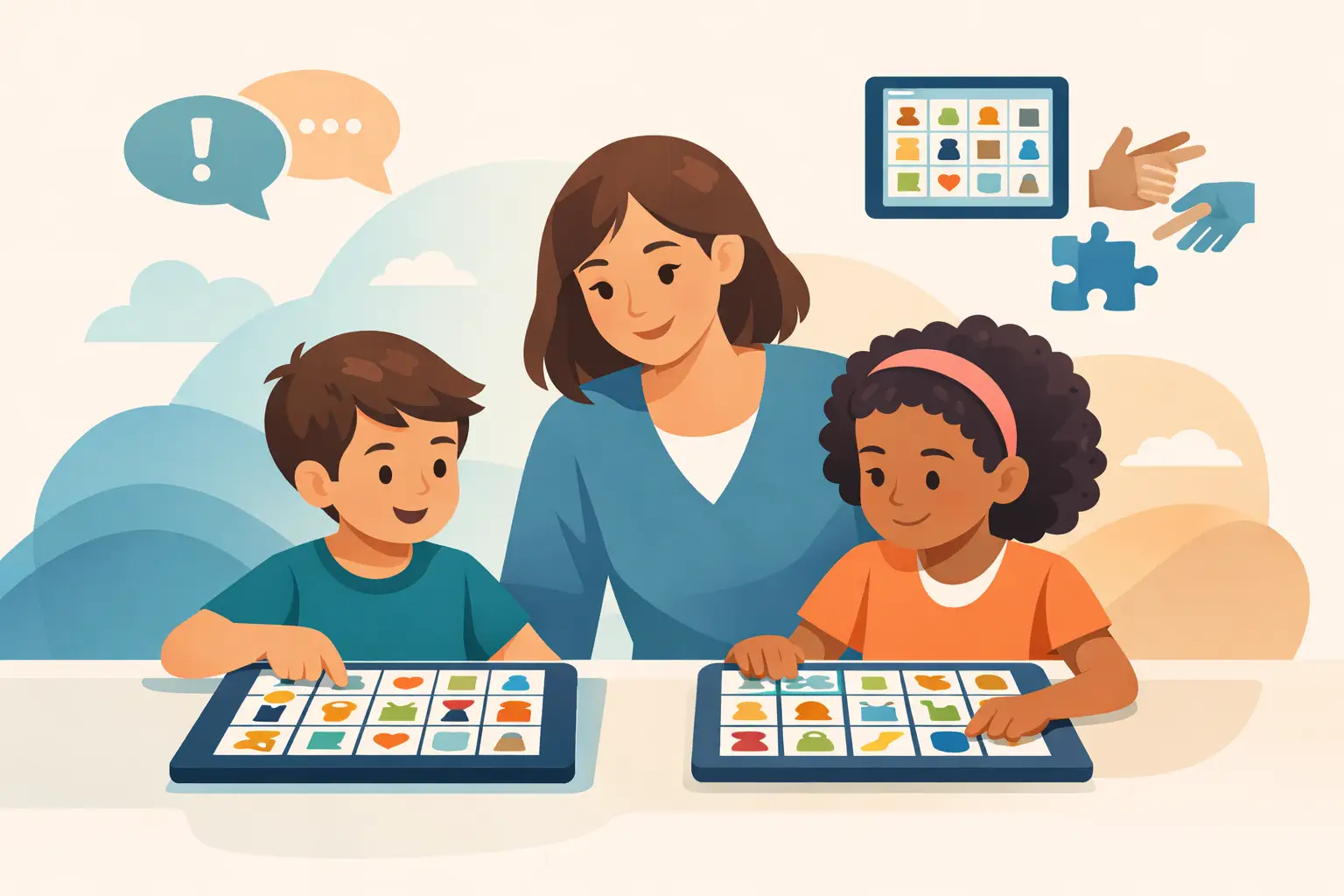
A child reaches for a snack, needs help with a toy, or wants to tell you about their day. When the words do not come easily, the right communication board can turn a frustrating moment into a successful interaction. The best communication boards for kids are not necessarily the ones with the most symbols or the flashiest features. They are the boards a child can access, understand, and use often enough to feel heard.
For families of non-verbal and minimally verbal children, choosing AAC can feel like a high-stakes decision. It does not have to be. Start with what your child needs to say today, then choose a system that can grow as their confidence, vocabulary, and independence grow.
What makes a communication board right for a child?
A communication board is a collection of letters, words, photos, or symbols that helps someone express themselves. It may be printed and laminated, displayed in a communication book, or used on a tablet with speech output. Each format can be valuable. The right choice depends on your child’s motor skills, vision, hearing, language understanding, daily environments, and personal preferences.
The most useful board gives a child meaningful control. It should help them request a favourite food, refuse something they do not want, ask a question, share an idea, and connect with people. A board limited to “more,” “eat,” and “toilet” may meet immediate needs, but it does not give a child many ways to show their personality.
Look for a system that supports both quick wins and longer-term language development. Early success matters because children are more likely to keep using a board when adults respond quickly and warmly. At the same time, a board should not trap a child in a small set of choices once they are ready for more.
Types of communication boards for kids
Printed picture boards
Printed boards are simple, portable, and dependable. They are useful at the table, in the car, at the playground, or during activities where a tablet is not practical. A basic board can include familiar items such as food, toys, people, places, and common actions.
They work especially well when adults need a low-pressure way to introduce AAC. A child can point, look, touch, or hand over a picture. The trade-off is that printed boards can become difficult to manage as vocabulary grows. They also cannot speak aloud unless a communication partner interprets the selection.
Communication books and topic boards
Communication books organize multiple pages by topic, such as meals, school, feelings, community outings, or favourite activities. Topic-specific boards can reduce the number of symbols visible at once, which may help children who find large displays overwhelming.
This format is often a good fit for children who need predictable routines and visual structure. However, flipping between pages can slow communication. Include a consistent way to say core ideas such as “I,” “want,” “not,” “go,” “help,” “more,” and “stop” across pages so your child does not have to hunt for essential words.
Digital AAC boards with speech output
Digital communication boards combine symbols with a voice, often on a tablet or dedicated device. They can offer a larger vocabulary without requiring a thick book of pages. A child may be able to build messages such as “I want to play outside” or “That was too loud,” rather than choosing a single item.
Speech output can be powerful in school, community settings, and peer interactions because it makes a child’s message easier for others to understand. Digital systems can also be personalized with family photos, familiar voices, preferred words, and layouts that match the child’s access needs.
The trade-off is that technology needs charging, protection, and adult support at first. A digital board should be quick to open, simple to customize, and available when your child needs it - not buried behind complicated setup steps.
Features to look for in the best communication boards for kids
Start with symbols your child can recognize. Clear, consistent pictures are often easier to learn than decorative images with distracting backgrounds. Some children respond best to standardized symbols, while others understand photographs of their own cup, bedroom, teacher, or pet more quickly. There is no prize for choosing the “right” image style on day one. Choose what makes sense to your child.
Vocabulary matters just as much as visuals. A board needs words for requesting, but it should also include language for protesting, commenting, asking, describing, joking, and sharing feelings. Children need access to words like “not,” “different,” “funny,” “again,” “where,” and “I think” if they are to take part in real conversations.
Consider physical access carefully. Can your child point accurately? Do they use a single finger, whole hand, eye gaze, a keyguard, or a switch? Small buttons may work for one child and create constant frustration for another. The board layout, spacing, symbol size, and navigation should match how your child moves, not force them to adapt to an uncomfortable design.
A good communication board also needs to work across the places where life happens. If a child communicates one way in therapy, another way at school, and has no board at home, progress can stall. Consistency helps children learn that communication works with many people, not only with one supportive adult in one room.
Finally, look for a way to see what is working. Usage patterns can show which words are being used, which pages are avoided, and where new vocabulary may be needed. This is especially helpful for parents who want to support their child between appointments and for professionals who need clear evidence of progress across settings.
Choose for communication, not compliance
A communication board should never become a test a child has to pass before receiving something they need. If your child is thirsty, hungry, uncomfortable, or upset, respond to the message you understand while continuing to model the words on the board. The goal is not perfect pointing. The goal is for your child to learn, “When I communicate, people listen.”
Modeling is one of the most effective ways adults can help. As you speak, touch a few relevant symbols on the board. If you say, “We are going outside,” point to “we,” “go,” and “outside.” You do not need to create a full sentence every time or expect your child to copy you. Frequent, natural exposure builds familiarity without pressure.
Give your child time to respond. Many children need longer processing time than adults expect. Ask a question, pause, and keep the board available. Filling the silence too quickly can unintentionally teach a child that someone else will speak for them.
A practical way to get started at home
Begin with a small set of high-value words connected to real routines. Think breakfast, getting dressed, play, bath time, favourite shows, and family members. Keep the board visible and within reach, rather than bringing it out only when you want your child to practise.
Use it yourself throughout the day. Model one or two words while speaking naturally, celebrate every attempt to communicate, and add vocabulary based on what your child actually tries to say. If they repeatedly reach for bubbles, add words that expand the interaction: “open,” “again,” “big,” “pop,” “fun,” and “all done.”
As your child uses more language, add options gradually. Too many symbols at once can be visually demanding, while too few can limit expression. This is where a system that adjusts with the child can reduce guesswork. VoiceBloom, for example, combines a symbol-based board with speech output, progress tracking, and coaching that helps families and professionals make informed next steps from real use.
When to involve an SLP or school team
You do not need to wait for a formal assessment to begin offering communication supports. A child can benefit from access to symbols and language modelling right away. Still, a speech-language pathologist can be an important partner when a child has complex motor needs, visual differences, hearing differences, unclear access methods, or difficulty navigating a board.
Bring educators into the process early. Share the vocabulary your child uses at home and ask what situations at school create the biggest communication barriers. A communication system is far more useful when the adults around the child agree on how to model it, honour it, and add meaningful words.
The best board is the one that gives your child more ways to be themselves - at home, in the classroom, and wherever they have something worth saying. Start with access, respond to every message, and let the system grow alongside the child using it.